
#forestproud in the Field
What makes you #forestproud in your career or life?
Forestry is more than a career; it’s a responsibility, a connection to place, and a long-term commitment that often extends beyond the workday.
For Forestry Foundation Scholars, being #forestproud shows up in different ways. It can be pride in stewardship, in community, in passing knowledge forward, or in knowing their work contributes to something bigger than themselves. In this post, scholars share what being #forestproud means to them.
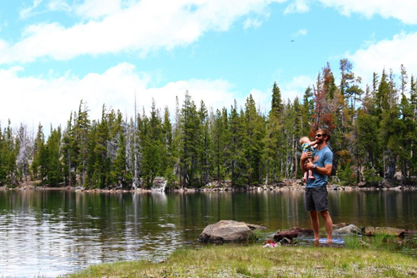
Brian Sebastian, wildfire training specialist, sees that connection to being #forestproud both at work and at home.
“In my life, I try to get my young family outside as much as possible. My kids are the best versions of themselves when they’re in nature, exploring and spending time outdoors. Most of my favorite hobbies bring me outside as well.
In my career, I’ve focused on fire management and incident response. Our wildlands and communities are threatened by catastrophic wildfires every year. Without active forest management that builds resilience, many of our special places may not exist for future generations.
I’ve seen firsthand how effective forest management can make wildfires easier to survive and contain. Managing for healthy, diverse, and adaptable forests helps protect both our natural treasures and our communities. I’m proud to have played a role in improving forest resiliency.”
For others, that sense of pride starts with a simple but powerful motivation: to care for their communities. Maxwell Brown, a student at Southern University studying urban forestry, puts it simply:
“I’m #forestproudbecause I care about trees and greenspaces, and I want to make a positive impact on my community.”
Community impact is also a highlight in the work of Asija Rice, a project forester at the Center for Heirs’ Property, where education and outreach create lasting change.
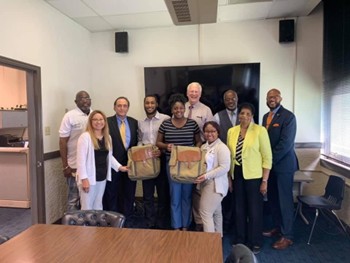
“Being able to touch the community, that’s what makes me forest proud. When we have 150 people coming through museum events, they leave knowing something they can take home and share. People learn about invasive plants, the cost of removing trees, and what happens if you don’t manage your land. You’re not just teaching information, you’re changing lives and building generational wealth.
What I notice is that the people I help aren’t being selfish. They’re doing this for something they may never get to see, for the next generation, and the generation after that.”
That long-term mindset is a defining thread across the profession and across our featured Forestry Foundation Scholars.
Carter Crosby, a land and resource company owner serving private landowners, feels pride in balancing production with stewardship:
“I’m proud to work with the land in a way that creates valuable products while also benefiting local communities and the environment. That balance is rare today. Sustainable timber management requires replenishing what we harvest, and I take pride in knowing my work contributes to regeneration and the long-term health of the land.
Foresters in the timber industry have a unique purpose: we don’t just take, we improve and prepare for the next generation. That’s something worth being proud of.”
In forestry, responsibility often means working toward outcomes you may never see for yourself.
Joshua Adams, program chair of the forestry program at Louisiana Tech University, reflects on that reality of the profession:
“What makes me #forestproud is knowing that the work we do is something we’ll never fully see completed. Forestry requires thinking hundreds of years ahead and leaving something meaningful for future generations.
There’s pride in contributing to something that will last far longer than we will, and in knowing that our decisions today help shape the forests our grandchildren will inherit.”
Marcus Rutherford, a forester with a family-owned land management company, shares a similar perspective:
“Our work has ramifications for decades, sometimes generations. When you manage a forest, you’re influencing that ecosystem for people who will come long after you.
When you cut a stand, you know you’ll never be around to see the next harvest, but you still make decisions to ensure things will be better decades from now.”
For others, pride comes from seeing how forests connect to everyday life in ways people may not realize. Kate Dimattia, a senior wood procurement buyer, highlights her role in that connection:
“Every time I see an Amazon box, a juice box, or even diapers, I know the people who helped make that happen. I get to be part of that chain, from the person who planted the tree all the way to the person using the product. I’m proud to help both sides of that chain feel good about their choice to use forest products.”
That connection, from forest to product to people, is something Todd Martin, President and CEO of Southern Loggers Cooperative, has watched evolve over decades:
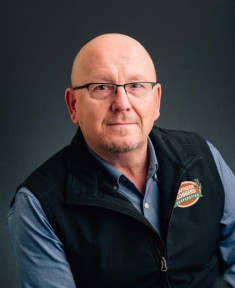
“We’re managing one of the most beautiful natural resources there is. And we get to see the results of that work in everything forests provide—wildlife habitat, aesthetics, and everyday products like paper towels. Over my 37-year career, I’ve also seen the industry evolve for the better, with innovations like mass timber, biomass, and biochar.”
Across different roles, career stages, and backgrounds, these scholars share a common motivation: pride rooted in responsibility. Whether through managing working forests, protecting communities from wildfire, strengthening urban green spaces, or educating future foresters, their work is guided by a long-term view.
Being #forestproud isn’t about recognition; it’s about stewardship, care, and commitment to something that outlasts any one career. These are the values shaping the future of forestry, carried forward by those willing to invest in the land, the people, and the generations still to come.