
Why do people choose forestry?
For some, it starts with family. For others, time outdoors, a college class, or a moment when a different future suddenly feels right. There is no single path into forestry, and that is exactly what makes the field strong.
Through the Louisiana Forestry Association’s Forestry Foundation Scholar program, students across generations have been able to explore careers in forestry and turn interests into opportunities. In this first of four series, scholars share what inspired them to choose forestry and pursue this profession.
For Brian Sebastian, now a wildfire training specialist, forestry was familiar from the start.
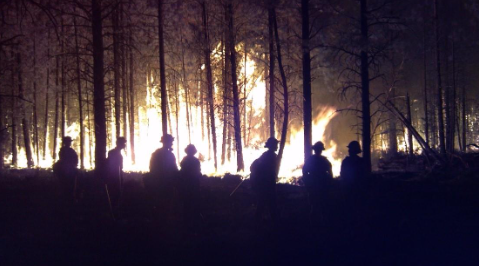
“My dad was a forester, so I have been exposed to forestry and the outdoors my whole life. In college I tried to pursue other fields, but I kept going back to the outdoors and sought a career there. I chose a degree in forest resource management and worked forestry jobs in the summer. In doing so, I realized that stewardship was one of my core values, which is also important in forest management, so it was a good fit immediately.”
Sebastian’s story reflects a common theme among forestry professionals: early exposure may open the door, and purpose propels people forward into the field.
For Ronald Chance, a forest manager for a timber company and one of the earliest Forestry Foundation Scholars, forestry was not the expected path, but it became the right one.
Chance grew up in Westlake, Louisiana, in a refinery town where most students planned careers in the oil and gas industry. Engineering seemed like a logical future. But time spent visiting family in rural Louisiana hunting, camping, and exploring the woods, began to change how he saw his surroundings and his future.
As college approached, practical realities also shaped his decision. Staying close to home mattered, both financially and personally, and McNeese State University offered a forestry degree. What began as a possibility soon became a calling.
“I kept going back to the forestry curriculum section and wondering if that was the route I should take. I visited one of the forestry professors to learn more, and my interest became more intense. I could not ignore the idea of working in the woods, even though becoming an engineer had long been the plan.”
That decision launched a career in forestry that has spanned decades; one rooted in stewardship and a connection to forests.
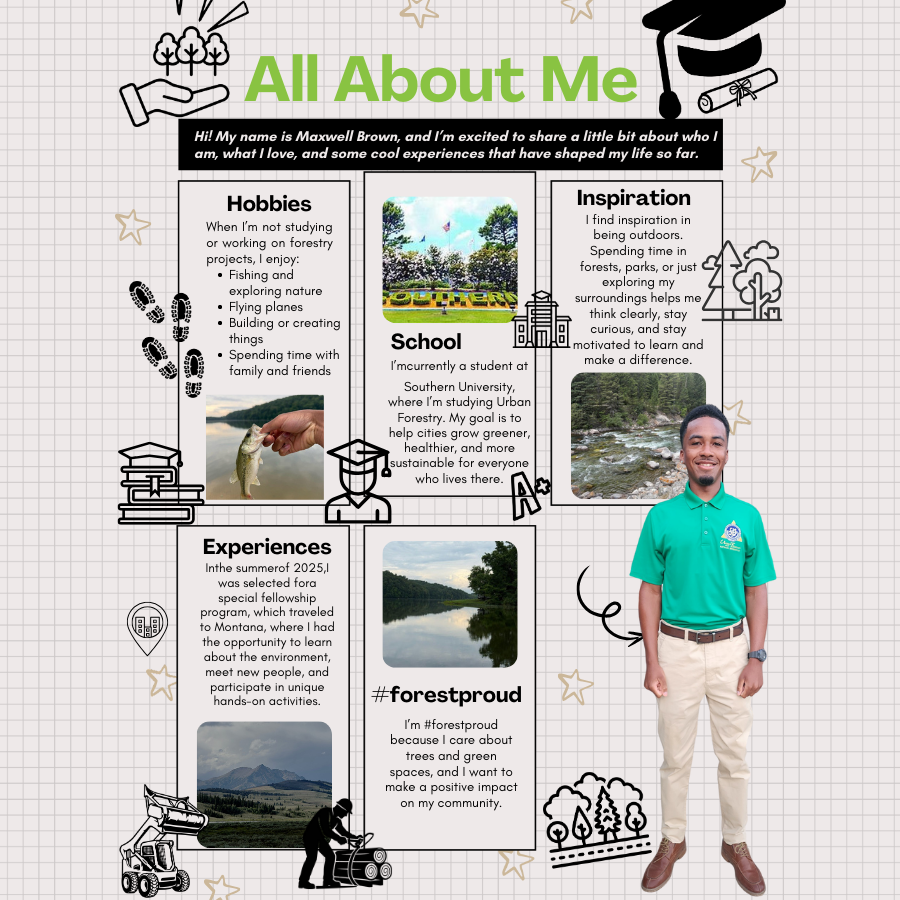
For Maxwell Brown, a student at Southern University studying urban forestry, inspiration comes from curiosity and connection to the outdoors.
“I find inspiration in being outdoors. Spending time in forests, parks, or just exploring my surroundings helps me think clearly, stay curious, and stay motivated to learn and make a difference.”
Brown’s focus on urban forestry highlights how the profession continues to evolve, bringing trees and forest management into cities and communities.
These stories show just how many ways people find their way into forestry. Whether it starts with a family's influence, a love of the outdoors, a desire to see more trees in urban spaces, or a shift away from an expected career path, forestry offers room to grow.
From field-based work and wildfire response to technology, urban forestry, policy, and management, the profession needs people with different skills and perspectives. If you care about forests and the communities connected to them, there is a place for you in forestry.
In upcoming posts, we will share more Forestry Foundation Scholar stories, highlighting how education and support continue to shape the next generation of forestry professionals.